Loading
Design Systems
A design system is not a component library. It is an agreement between design and engineering, with a component library attached.
01Why it matters
Organisations usually ask for a design system after the third team has built its own date picker. The visible symptom is inconsistency. The underlying problem is that there is no agreed way to decide what something should look like, so everyone decides separately and reasonably.
We build systems that answer that question. Tokens carry the decisions, components carry the behaviour, and the documentation explains the reasoning so a team facing a case the system does not cover can extend it correctly rather than work around it.
The part that determines whether a system survives is governance, and it is the part most often skipped. We set up how changes are proposed, who decides, how versions are released, and how the teams consuming the system find out that something changed. Then we hand it over and help the first two teams adopt it.
02What we do
The work inside the engagement.
- 01
Interface audit
A full inventory of what currently exists across products — every button variant, every spacing value, every one-off — as the evidence base for what the system needs to cover.
- 02
Tokens and foundations
Colour, type, spacing, elevation, motion and radius defined once, with the contrast and reduced-motion behaviour verified rather than assumed.
- 03
Component engineering
Accessible, tested components in your framework, published as a versioned package with a changelog that means something.
- 04
Governance and adoption
A contribution model, a release process, and hands-on support for the first teams to adopt it — the point at which most systems either take or die.
03A typical engagement
A designer and two engineers working alongside your own team, with the intention that they take ownership before we leave.
- Typical duration
- Four to eight months
- What you receive
- An audited inventory of the current interface estate
- A token set and documented foundations
- A versioned, accessible component package
- A governance model and adoption support for the first teams
04Proof
All workWhere this work has been done.
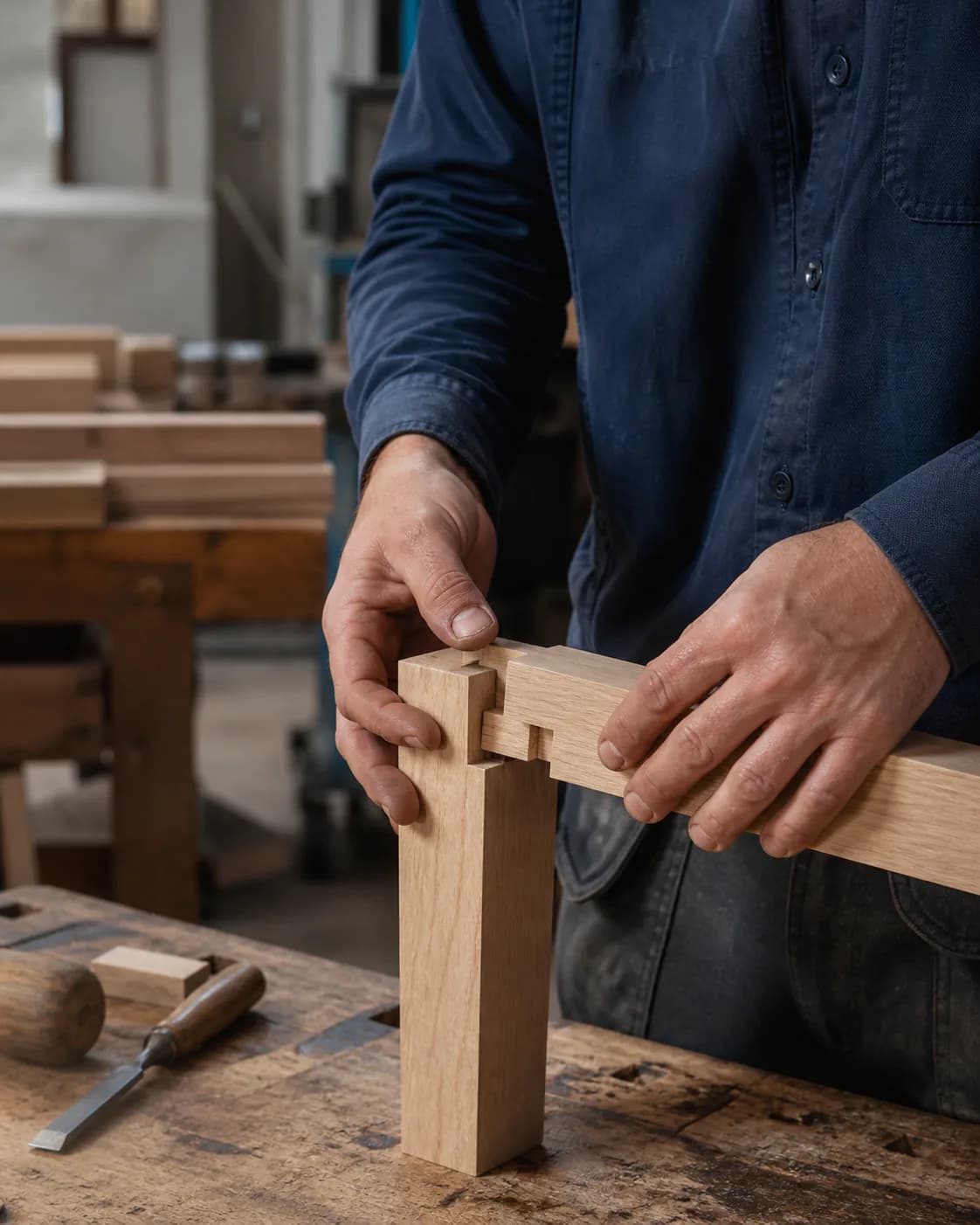
Ashcombe & Fell
A replatform that did not interrupt the workshop
A furniture maker selling configurable pieces through a platform that could not describe them, moved onto one that could — without pausing trade.
Read the case study
The Calder Institute
Publishing research that can still be read in twenty years
A research institute with sixty years of output spread across four incompatible systems, consolidated onto one durable publishing platform.
Read the case studyNext step
Tell us what is not working. We will tell you what we think.
A first conversation is an hour, costs nothing, and usually ends with a straight answer about whether we are the right studio for the problem.