Publishing research that can still be read in twenty years
A research institute with sixty years of output spread across four incompatible systems, consolidated onto one durable publishing platform.

- Client
- The Calder Institute
- Industry
- Research and higher education
- Location
- Edinburgh, United Kingdom
- Year
- 2023
Services
Our role. Strategy, content modelling, platform delivery and design system.
01The problem
The Calder Institute publishes economic and social policy research. Sixty years of it existed across a legacy content management system, a document repository, a departmental site built in 2011 and a shared drive.
Citations pointed at URLs that no longer resolved. The same paper existed in three places with three different abstracts. Researchers had stopped using the institute’s own site to find the institute’s own work.
The institute’s requirement was unusual and entirely correct: whatever we built had to be readable in twenty years, and had to survive the platform it was built on being replaced.
02What we did
- 01
Treat permanence as the requirement
We designed the URL scheme, identifier strategy and content model first, on the assumption that the rendering platform would be replaced at least twice within the lifetime of the content.
- 02
Consolidate before migrating
Deduplicating sixty years of publications was six weeks of unglamorous work with the institute’s librarians. It was also the only way the migration could have succeeded.
- 03
Design for the reading, not the browsing
Most visitors arrive at a single paper from a citation or a search result. We designed the paper page as the primary experience and the browsing structures around it.
- 04
Hand over the system
The component system and content model were documented for the institute’s own developers, who have maintained the platform without us since handover.
03What we built
One publication record per piece of research, with persistent identifiers, structured citation metadata and every historical URL redirected to it.
A reading experience designed for long-form policy research — footnotes, figures, tables and downloadable data, all legible on a phone.
A documented component system and content model that the institute’s own team has extended twice since we left.
04Outcome
- Every citation the institute has issued since 1964 now resolves to the current record.
- Researchers use the institute’s search rather than a general search engine restricted to its domain, which was the honest measure of the old system.
- The institute’s developers have shipped two significant additions to the platform without our involvement.
- Publications consolidated
- 3,180
- Legacy systems retired
- 4
- Historic URLs redirected
- 11,400
More work
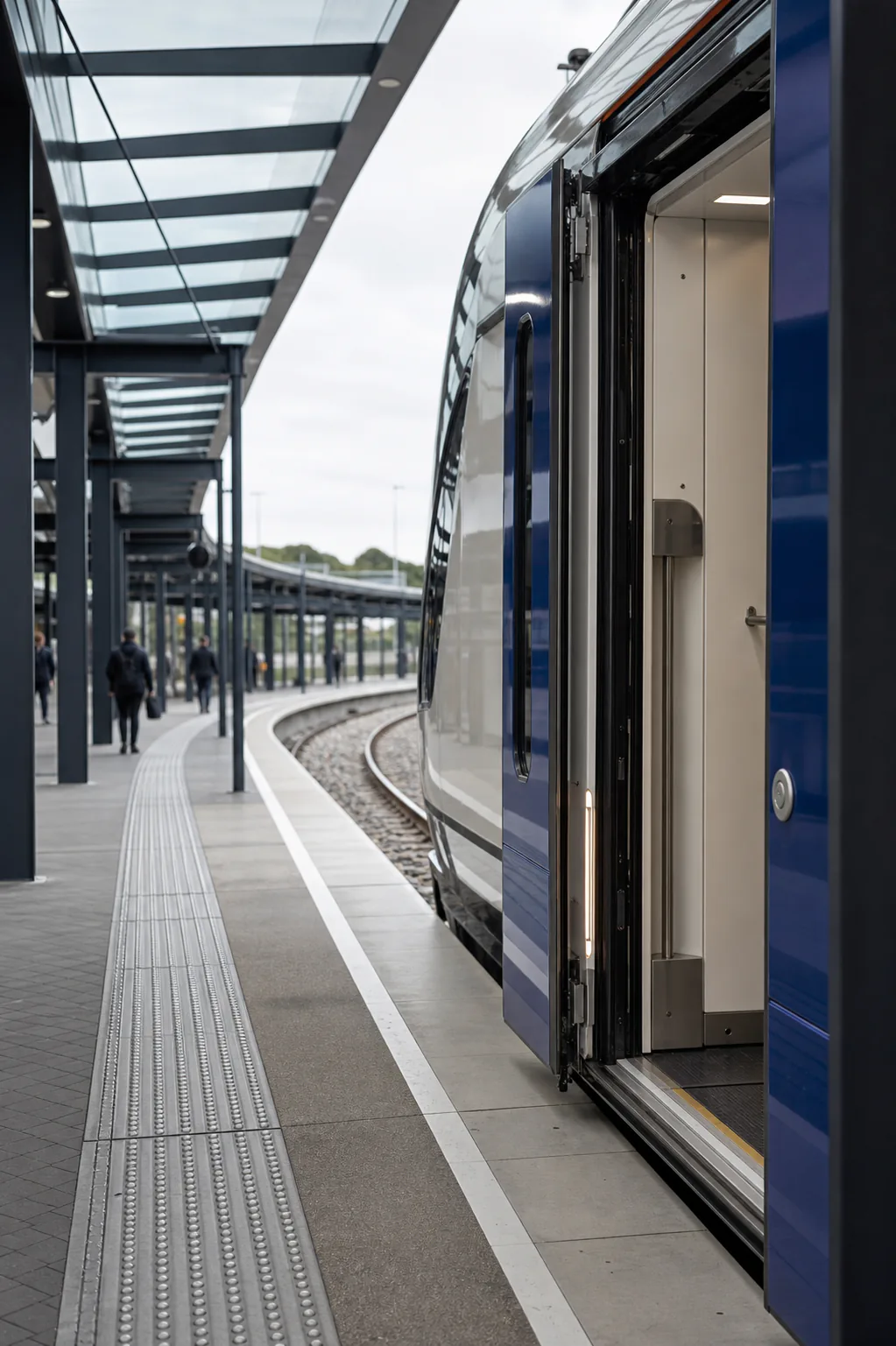
Meridian Rail
One design system across nine customer products
A passenger operator whose nine digital products had drifted into nine different interfaces, brought back into one system with accessibility as the organising constraint.
Read the case study
Halden Maritime
Replacing forty spreadsheets with one operations platform
A port services operator running its entire scheduling function on shared spreadsheets, rebuilt as a single system its planners actually wanted to use.
Read the case studyNext step
Tell us what is not working. We will tell you what we think.
A first conversation is an hour, costs nothing, and usually ends with a straight answer about whether we are the right studio for the problem.